
The United States on Monday announced sanctions on disgraced Pakistani scientist A Q Khan and 12 other individuals for their involvement in clandestine nuclear proliferation network providing atomic weapon designs and technology to North Korea, Iran and Libya. The sanctions were announced after a 'multi-year US government review of the available information pertaining to the activities of this network', it said.
Pakistan plans to generate 8,800 mw from nuclear sources by 2030, the study says, adding the government has already formulated an energy security plan in this regard.

'India should take up defence manufacturing in a more serious manner and encourage greater private participation.'
The Pakistani junta is concerned over India's strides in defence technology, Pervez Hoodbhoy said.

'When the Americans are talking about colonising Mars by 2030, India cannot be lagging behind.'
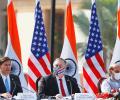
China is now the most significant strategic concern in Washington, as in most of the world's capitals, especially the democracies. Today, strategic autonomy has acquired a sharper definition: To ward off the Chinese challenge to India's territorial integrity, sovereignty and regional stature, observes Shekhar Gupta.

For a rising country like China with its sights set on global and regional power, any coming together of the US and India is the worst case scenario. Hence, China is concerned with the emerging equations between New Delhi and Washington, says Srikanth Kondapalli.
Expressing concern over the release of A Q Khan from house arrest, the United States told Pakistan that the disgraced nuclear scientist continues to be a "serious threat" to proliferation of nuclear weapons technology. US Special Representative for Pakistan and Afghanistan Richard Holbrooke, who is currently on a visit to Islamabad, certainly raised the issue pertaining to A Q Khan, State Department spokesperson Robert Wood said on Wednesday.
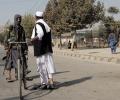
Pakistan would want to take full advantage of the situation to direct Taliban trained terrorists into the Kashmir Valley, alert Lieutenant General Ashok Joshi (retd) and Colonel Anil A Athale (retd).
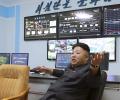
The External Affairs Ministry on Thursday discarded the article titled 'India's embarrassing North Korean connection' by Nilanjana Bhowmick in Al Jazeera, a Doha-based broadcaster, saying the insinuation regarding New Delhi's assistance to North Korea in United Nations proscribed activities is 'baseless and without any merit.'

Boosting trade and simplifying visa regime, apart from security and defence cooperation, were among the key bilateral issues. The two leaders also discussed regional and international matters of mutual interest.

T N Seshan believed that toughness at every level is needed to keep the flock under him strictly duty bound, recalls Dr K S Parthasarathy, former secretary, Atomic Energy Regulatory Board.

'Well begun is half done, today there are more hits than misses by the Modi government in its support towards science in India,' says Pallava Bagla.
Amidst growing Congressional concern over the safety and security of Pakistan's nuclear arsenal, US Senator Thomas R Carperas said that "preventing Pakistan's nuclear weapons and technology from falling into the wrong hands should remain top priority." Carperas chairs the Senate Subcommittee on International Security -- an appendage of the larger Committee on Homeland Security and Governmental Affairs
Here's a peek into the future of auto and consumer electronics.
In a step closer to the operationalisation of the Indo-US nuclear deal, US President George W Bush has formally certified to the Congress that the 123 agreement is consistent with the Nuclear Nonproliferation Treaty.

The United States is committed to ensuring India's entry into the Nuclear Suppliers Group, a top American diplomat said on Wednesday, expressing "regret" that his government was unsuccessful in making it a member of the grouping at its pleanary in Seoul last week.
Gung-ho about the prospects of nuclear power generation over the next two-three years, Puri said that by 2006, BHEL would clinch a technical tie-up with one of the companies from the developed world.
India will next Monday sign a key safeguards agreement with the International Atomic Energy Agency to allow supply of atomic fuel and technology to the country moving a step closer to operationalising its international civil nuclear cooperation after the 34-year-old nuke trade embargo was lifted.
Iran says it has made progress in nuke fuel cycle programme

The US is not going to be able to mount a concerted 'Western strategy' against China or Russia in the present international milieu, predicts Ambassador M K Bhadrakumar.
The Congressional Research Service stipulated three conditions: cooperation on Khan's network, commitment to bar nuclear tests and transfers and restraint on nuclear and missile competition with India.
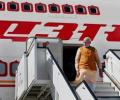
Prime Minister Narendra Modi will embark on a four-day trip to Japan from August 31 to bolster bilateral ties in key areas of civil nuclear cooperation, security, defence and trade.
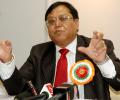
Saraswat played a key role in developing a series of missiles at a time when India faced tight international technology sanctions.
The next plenary session of the Nuclear Suppliers Group is likely to be held in Swiss capital Bern next month.
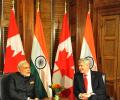
The company is excited over the pact, which it says marks the 'start of a new relationship' between the two countries.

Keeping trusted men in key positions at Lahore, Rawalpindi and Peshawar has become vital for Bajwa, notes Rana Banerji, who headed the Pakistan desk at the Research and Analysis Wing, India's external intelligence agency.
"If we remain dependent on foreign technologies, we can never become world leaders and we cannot survive the global competition unless we achieve global leadership at least in some areas where we have strength," Kakodkar said at the convocation of Pt Ravi Shankar Shukla University in Raipur.
External Affairs Minister Pranab Mukherjee said India's participation in a new global consensus on non-proliferation would strengthen global efforts in this arena.
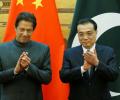
In recent years, China has refrained from taking a public stance on the India-Pakistan ties, expressing hope for resolution of the disputes through dialogue.
President Obama said trade deals signed in Mumbai were important steps to elevating India as key US trade partner.

Although Trump had announced his decision to withdraw from the historic Paris Agreement on climate change on June 1, 2017, the process began on Monday with the formal notification and the US will be out of the pact on November 4, 2020.
In an apparent bid to counter the Indo-US civil nuclear deal, Pakistan plans to seek fuel technology from China for 10 new atomic power plants it intends to set up over the next two decades.

Every blade of grass and grain of sand in Mehrangir has a story to tell: The story of how one of the greatest sons of India lived here, planned and executed from here a technological and scientific enterprise which became the envy of the world. The government must save Mehrangir for future generations, says Dr K S Parthasarathy.
The expansion into nuclear is part of the group's plan to invest as much as $ 50 billion by 2014 to expand its business in the world's second-most populous nation. The group has already concluded talks with overseas companies which can offer technological and related support to enter the business. "There will be a flood of American investments in the country once the deal is concluded," S P Hinduja said.
Brazil and South Africa, key members of the Nuclear Suppliers Group, on Tuesday decided to explore ways for cooperation with India in civil nuclear field through "acceptable forward-looking approaches."

'If the Russian forces do capture Kyiv and set up some sort of provisional government, they might run into an insurgency, for which the geography is just right, it could prove costly for them.' 'In that event, the whole exercise could turn out to be counter-productive -- and costly in both foreign policy and domestic terms.'
Minister of State in the PMO Prithviraj Chavan said India needed to have international cooperation to acquire uranium technology and fuel which is insufficient in the country. Noting that all countries in the world had uranium-based nuclear programmes, he said that India is deficient in the fuel and whatever reserves existed would be exhausted after some time. He allayed the impression that the government was not exploiting thorium, which is available in sufficient quantity.
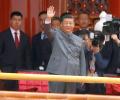
'India finds itself in an unenviable situation today with its prospects diminished by acutely polarised domestic politics and the setbacks suffered during the pandemic,' notes Ambassador Shyam Saran, the former foreign secretary.

'Pyongyang's strategy seems to be a cry to be treated as equal with the US and Beijing and this aspiration is premised on equipping itself with weapons as devastating as theirs,' says Rajaram Panda.
 © 2026 Rediff.com - Advertise with us - Disclaimer - Privacy Policy - Sitemap - Feedback - About us - Terms of use - Grievances